
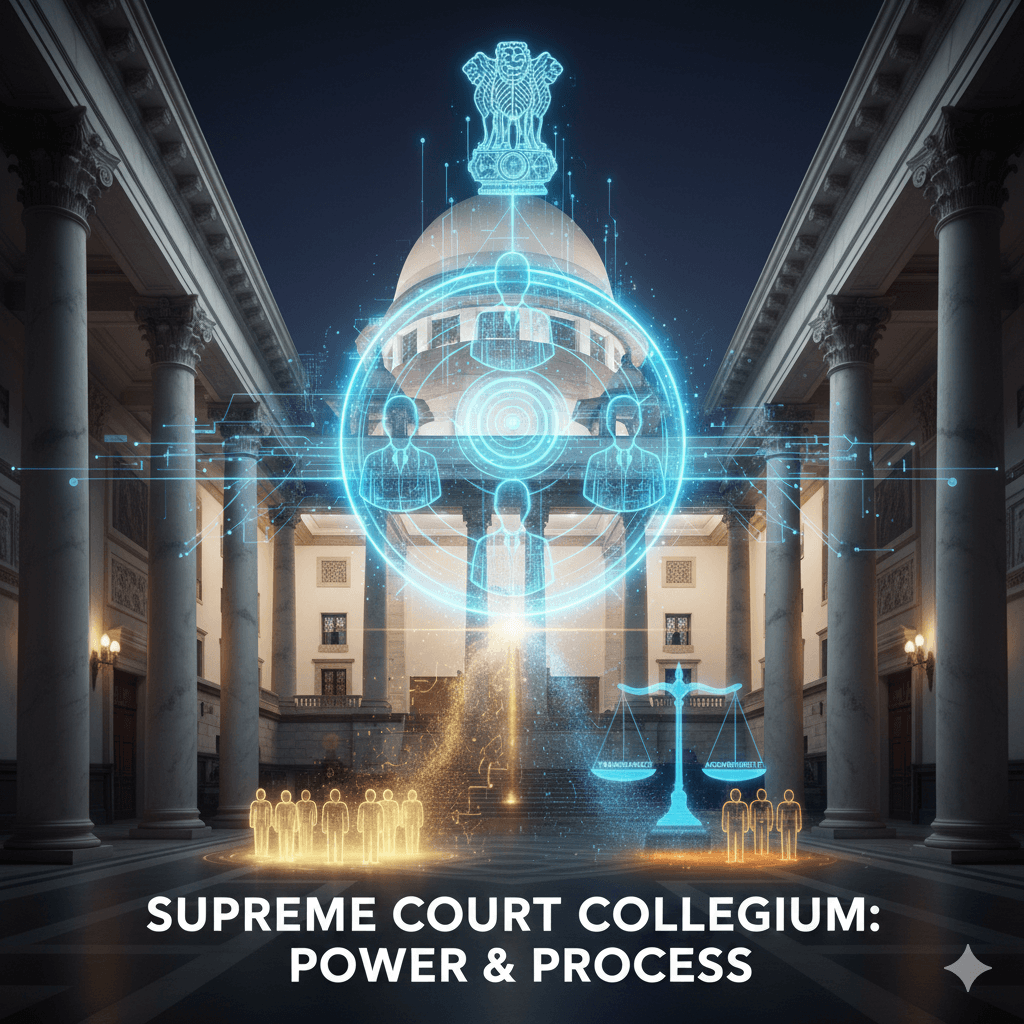
India’s judiciary is respected globally for its strong constitutional role, but one issue continues to spark heated debates: the Collegium System of appointing judges in Supreme Court and High Court.
Supporters call it a shield for judicial independence.
Critics call it an opaque system with no accountability.
The government and the judiciary have clashed over it repeatedly.
Here’s a balanced, easy-to-understand breakdown of the entire debate.
⚖️ What Is the Collegium System?
The Collegium is a group of senior judges who decide who will become judges of the higher courts.
Who’s in it?
- Supreme Court Judges: Chief Justice of India + 4 senior-most judges
- High Court Appointments: Chief Justice of that High Court + 2 senior judges
What do they do?
They recommend:
- Appointment of judges
- Transfer of judges
The government can raise objections, but the final word lies with the Collegium.
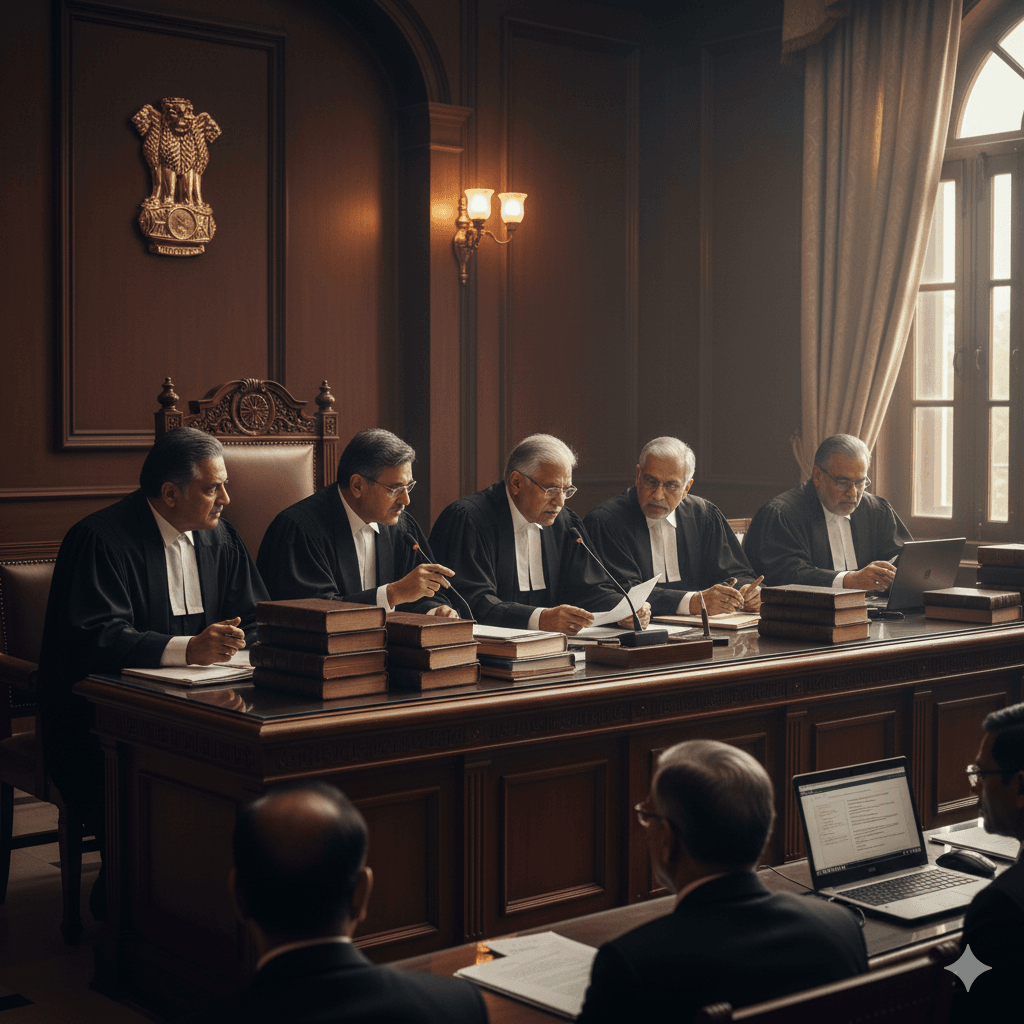
📜 How Did the Collegium System Start? — The Three Judges Cases
1️⃣ First Judges Case (1981)
Government gets primacy in appointments.
2️⃣ Second Judges Case (1993)
Judiciary takes control. Collegium System is born.
3️⃣ Third Judges Case (1998)
Collegium expanded to 5 judges in Supreme Court.
Thus, India has a judge-selects-judge system — not found in any other democracy.
🔥 Why Is the Collegium System Controversial?
❌ 1. Lack of Transparency
- No published criteria
- No written tests, interviews, or open selection
- Decisions taken behind closed doors
- Minutes of meetings not public
Even the reasons for rejecting or selecting a candidate are not disclosed.
❌ 2. Allegations of Nepotism
Critics argue the system encourages:
- Favoring relatives
- Promoting known lawyers
- Ignoring meritorious candidates from smaller towns
This is often called “uncle-judge syndrome”.
❌ 3. Executive Has Minimal Role
In democracies like the US/UK:
- Legislature + Executive play key roles
But in India: - Government can only send files back once
- If Collegium reiterates → Govt must appoint
This sometimes leads to clashes, delays, and return of files.
❌ 4. Vacancy Crisis
India’s courts face huge backlogs.
Delays in appointments due to disagreement between Government and Collegium slow down the justice system.
🌟 Why Supporters Defend the Collegium
✔️ 1. Protects Judicial Independence
If the Executive controls appointments:
- Judiciary loses its freedom
- Risk of political influence increases
The Collegium prevents that.
✔️ 2. Prevents Political Interference
Judges who decide cases involving:
- Govt policies
- Election disputes
- High-profile investigations
…should not be appointed by the same government they judge.
✔️ 3. A Unique Model for Indian Conditions
India’s diversity + political polarization =
A judge-led appointment system is seen as safer.
⚔️ The NJAC Debate: A Failed Attempt to Reform
In 2014, Parliament passed the National Judicial Appointments Commission (NJAC).
It included:
- CJI
- 2 senior SC judges
- Law Minister
- 2 eminent persons
Goal:
More transparency + executive participation.
But in 2015, the Supreme Court struck it down as unconstitutional, saying it compromised judicial independence.
This reignited the debate.
🔍 The Present Stand-Off
Government:
“Collegium is opaque, unaccountable, and outdated.”
Judiciary:
“NJAC was a threat to independence. Reform the Collegium, don’t replace it.”
Public:
“We just want transparency and timely appointments.”
🧭 What Reforms Are Being Suggested?
- Publish criteria for selection
- Make minutes of meetings public (with limits)
- Diversity in selection — include women, SC/ST/OBC, regional representation
- Independent secretariat to assist Collegium
- Clear timelines for government response
- Performance evaluation of judges
- Hybrid model → Collegium + external oversight
📝
The Collegium System is one of India’s most debated institutional mechanisms.
It protects the judiciary from political interference, but its secrecy and lack of accountability raise genuine concerns.
The solution may not lie in replacing it, but reforming it to ensure a balance between:
- Judicial independence, and
- Transparency + accountability
Until then, the debate continues, and so does the tug-of-war between the Judiciary and the Executive.
Other related post:
Supreme Court – Composition & Jurisdiction